

Are you a sea lover, dreaming of a vacation sailing with your friends or family?
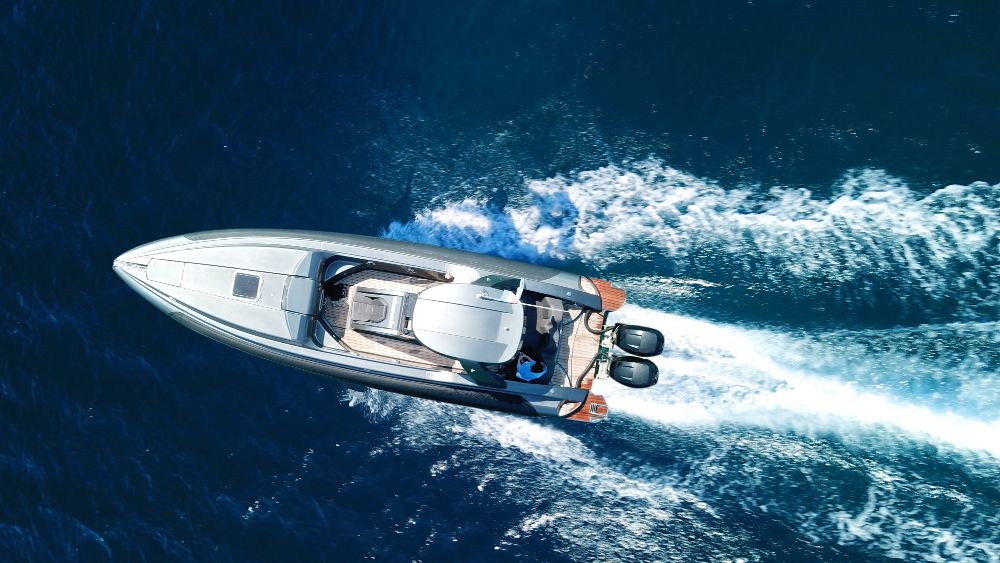
7 Reasons to buy a rigid inflatable boat (RIB)
1. RIBs handle waves more smoothly than rigid boats. The unique design gives them superior stability and maintains a stable ride even through the roughest seas. The buoyancy tubes keep them practically unsinkable.
2. Another advantage of the RIB is its high maneuverability. The decreased weight of RIBs makes them exceptionally responsive and easy to maneuver, making docking and side-tying much easier and safer.
3. Rigid inflatable boats have a high capacity allowing you to load up your boat and remain safe to operate efficiently.
4. The design of RIBs is made to support more powerful motors. Because of their lightweight build, rigid inflatable boats need comparably less horsepower to reach high speed or get up on a plane much faster.
5. RIBs are dependable, not only resistant to damage, but also their parts are easily repairable and replaceable to keep working smoothly.
6. RIBs are easily customizable, from seating arrangements to sizing and power options to accommodate your needs
7. The inflatable siding increases safety, protects your boat and other boats while docking and maneuvering, and reduces the impact in case of a collision.

What to consider when buying an inflatable boat?
What are your needs?
How many passengers will be on board, your family and friends? A conventional boat up to 3.80 meters may suffice. But, if you have more plans for the future, like seawater activities- fishing, snorkeling, water skiing, etc., buy a bigger boat from the start to avoid double expenses and paperwork.
Some RIBs have all open deck space appropriate for leisure trips, while others have an enclosed cabin and deep v-hull for the more adventurous. There is a wide range of accessories available for RIBs, so you can equip your boat to serve your needs.
Fuel cost
Fuel consumption depends primarily on the size, weight, and engine of the boat. So, choose the right boat size to avoid paying for more fuel than necessary. Because of their lightweight construction RIBs are fuel efficient without sacrificing functionality.
Motor options
A gasoline outboard motor has low consumption and less maintenance. Otherwise, opt for an electric outboard with a low cost and satisfactory performance. The electric outboards operate on an external car-type battery and offer 2-3 hours of autonomy, depending on use.
Build quality
When you narrow down your choices, check the quality of construction, and look into relevant quality certificates and the company’s certifications. Be cautious of “bargains” and low prices. Other points to consider are:
“Dry” storage space,
The deck’s capacity to drain water efficiently,
Sturdy, well-positioned grabbing points,
Non-slip surfaces underfoot and on the tube tops,
Sufficient payload for all passengers and the equipment you will need,
Appropriate seating/deck space for your intended use.
When buying a RIB, consider the helming position, and the electronics need to be large enough to view at a glance.
Whatever kind of boat you pick, look for a reputable builder, hull, and tube warranties.
The guarantee
Most boaters will probably use it in the summer, so a one-year warranty is worthless. Go over the benefits of the guarantee – the damages it includes to the various parts (hull, fabric, and deck) and the possibility of towing it in the case of an accident while transporting, etc., to eliminate extra costs that may arise.
Speed boat license
If it has an engine with a maximum horsepower of more than 15HP, you need to have a Speedboat Operator’s License obtained after courses at a Speedboat School and special exams.
Safety requirements
Even if a speedboat license is not needed, you should have all the safety gear required by the port authority.
Life jackets for the number of passengers + 1 extra
First-aid kit, matches, folding knife, battery radio
A smoke generator and lighters in a waterproof case
Anchor and rope
Docking and boat ramps
Take care of all the paperwork in advance before your trip. Before launching it into the water, you pay the necessary fees at the port office to receive a mooring permit. And remember, you can’t launch it into the sea from anywhere, only from the coasts with special boat ramps. You can find information at the port and a local nautical club or shop.

Transporting and “storing”
RIBs, in most cases, “inflate and deflate” effortlessly, which is very convenient for their transport. A car trailer may be necessary for transporting them to and from the sea. When you do not use it, you can keep it in your garage or a boat parking lot.
RIBs are designed to handle any situation safely and effectively, making them popular for recreational boaters and families. They’re perfect for watersports, diving, and exploring the seas. They offer a safe and comfortable ride. The variety of RIBs is huge, so take your time and do your research. RIBs can last up to 25 years, depending on the construction materials and how they are maintained. A RIB is a good investment you won’t regret.
